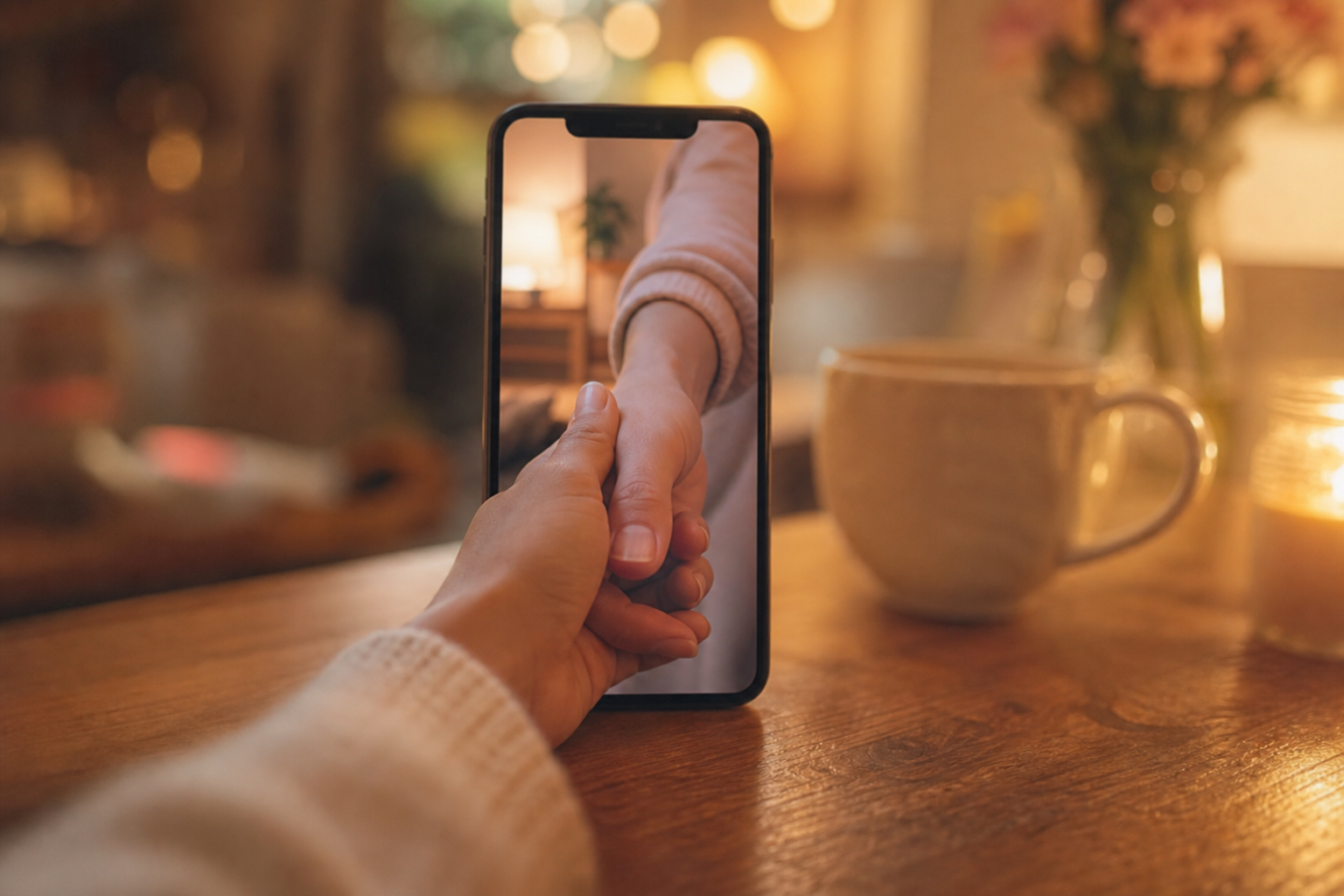
You notice that conversations flow less easily than before, that messages go unanswered, and that you increasingly find yourself thinking: maybe a long-distance relationship just doesn't work for us. That feeling hurts, especially if you once started this relationship full of conviction. You're not the only one struggling with this — distance puts pressure on every relationship, no matter how strong the foundation. The good news: the fact that it feels difficult right now doesn't automatically mean it has to end. There's often more you can do than you think, as long as you take an honest look at what's actually going wrong.
What does it mean when a long-distance relationship isn't working?
When people say a long-distance relationship isn't working, they rarely mean that the love is gone. Usually it's about a buildup of longing, uncertainty, and practical friction that wears down the connection. Physical distance means fewer spontaneous moments, less body language to read each other by, and more room for assumptions. Relationship therapists often see that long-distance couples actually work harder on their relationship than couples who live together — but that this effort doesn't always hit the right target.
According to insights from relationship therapy, including the work of The Gottman Institute, a lasting relationship rests on three pillars: friendship, shared meaning, and the ability to repair after conflict. Distance mainly affects the first pillar. You miss the small, everyday moments that nourish friendship — having coffee together, a glance across the table, helping each other with a chore. Without those moments, the connection has to be maintained deliberately, and that requires something different from infatuation alone.
The five love languages also play a role. If your partner mainly feels loved through quality time or touch, and you can barely offer that, the relationship starts to feel emptier — even though there's still plenty of affection. Recognizing which love language is being under-nourished is often the first step toward a solution that goes beyond "just video call more."
Signals and patterns you might recognize
Not every long-distance relationship gets stuck in the same way, but a number of patterns are common. Recognizing a few of these isn't a judgment on your relationship — it's information you can act on.
- Conversations become functional. You discuss schedules and logistics, but rarely feelings, dreams, or the small everyday things.
- Increasing jealousy or control. Uncertainty about what the other person is doing, and with whom, grows because you can no longer see it for yourself.
- Postponing decisions. Nobody talks anymore about when the distance will end, out of fear of a difficult answer.
- One-sided effort. One partner plans the calls, sends messages, and keeps the relationship "running," while the other becomes more passive.
- Fatigue around contact. Video calls start to feel like an obligation instead of something to look forward to.
These signals rarely stem from unwillingness. More often, busyness, stress, or simple exhaustion play a role — a dynamic that overlaps a lot with what we describe in the article about burnout and being in love, where fatigue crowds out room for connection. With distance, there's the added layer that you can't physically comfort each other through that exhaustion.
A practical approach: what you can do today
Change usually doesn't start with a grand gesture, but with small, concrete adjustments to how you shape your contact. Below are a few steps you can try this week already.
Plan connection, not just updates
Deliberately schedule a moment that isn't about practical matters, but purely about how you're both doing. Ask, for example: "What was the best moment of your week?" or "What's worrying you most right now?" These kinds of questions open up a deeper conversation than "how was your day."
Make longing something you talk about instead of hiding it
Say out loud that you miss someone, instead of hiding it behind busyness. A sentence like "I notice I'm missing you extra today, I wanted to say that" creates space, instead of letting the longing fester quietly underneath.
Use exercises that go deeper than small talk
Couples who are physically together often naturally get to know each other better through daily interaction. At a distance, you need to compensate for that with deliberate exercises. The how well do you know me quiz is an accessible tool for this: it gives you concrete questions to rediscover each other, even if you've known each other for years.
Voice a concrete perspective
Uncertainty about the future feeds doubt. Discuss together, even if the answer isn't final yet, what a realistic timeline looks like for bridging the distance. Even if it's just an intermediate step: "let's check in again in three months to see how things are going and what's needed."
Divide the effort fairly
Talk openly about who takes on what when it comes to maintaining contact. Unequal effort quietly breeds resentment. A simple check-in — "does the way we're splitting calls and planning feel fair to you right now?" — prevents one partner from becoming exhausted.
Overview: what helps and what actually widens the distance
| Situation | What widens the distance | What helps |
|---|---|---|
| Contact moments | Only sending practical messages | Deliberately scheduling time for a real conversation |
| Uncertainty | Keeping suspicions to yourself | Voicing worries out loud, without blame |
| Future plans | Avoiding the topic | Discussing a realistic timeline together |
| Division of effort | One partner arranges everything | Agreeing together on who does what |
| Longing | Hiding it behind busyness | Naming the longing without guilt |
When professional help is the honest next step
Sometimes the distance isn't the only problem — it mainly exposes what was already simmering before you started living apart. If conversations keep getting stuck in the same argument, if there have been breaches of trust, or if one of you consistently feels lonely or unimportant, that's a sign you can no longer work it out alone without guidance. That's not failure — it's a normal and sensible step.
A relationship therapist can help break patterns that you can no longer see yourselves, precisely because distance makes it harder to read each other well. Want to know what that involves in practice and what it costs? The article relationship therapy: what to expect and what it costs offers a clear overview, so the step feels less unfamiliar and easier to take.
If infidelity has occurred during the time apart, professional guidance is often worthwhile too. That process requires careful processing, something the article on relationship therapy after infidelity explores in more depth. If you're instead doubting whether continuing still makes sense, the perspective in the piece on ending a relationship after infidelity can help bring structure to that doubt, even if your situation looks different.
Frequently asked questions about long-distance relationships that aren't working
How do I know if our long-distance relationship still has a chance?
Don't just look at how heavy it feels right now, but at whether you both still want to invest together. Are you still talking openly about feelings, is there a concrete outlook on coming together, and does the effort feel fairly evenly split? Then there's often still a foundation. Does it feel one-sided and quiet? Then an honest conversation about the future is needed.
Is it normal for a long-distance relationship to feel heavier over time?
Yes, this happens often. In the beginning, the excitement of something new dominates, but after months or years, the absence of everyday closeness becomes more tangible. This doesn't mean the relationship is failing — it does mean you may need to adjust how you stay in touch to fit this new phase.
How do I bring up my doubts without hurting my partner?
Use "I" language instead of accusations: "I notice I'm doubting whether this still works for me" lands differently than "you're not trying hard enough." Choose a calm moment, not in the middle of an argument, and give your partner room to react without immediately pushing back.
Can video calling really replace what we miss physically?
Not entirely, and that doesn't need to be the goal. Video calling can maintain the emotional connection if you use it deliberately for real conversations instead of just updates. Where possible, combine it with other forms of attention, like a surprise message or a shared activity done at a distance.
What if we can't agree on when the distance will end?
This is one of the most common sticking points. Try not to force the conversation toward one final answer, but look for an intermediate step you can both agree on, such as a moment to revisit the situation again in a few months. If this topic keeps stalling, an outside party, like a relationship therapist, can help get the conversation moving again.
Does doubting mean the relationship is definitely ending?
No. Doubt is a signal that something needs attention, not automatically an ending. Many couples go through periods of doubt and come out stronger by taking the time to honestly explore what's needed to grow close again.
If you want to discover exactly where your relationship stands right now and which small steps could make a difference, Rela's free relationship check can be a calm and accessible starting point.